
 +86-18633235200
Wet Flue Gas Desulfurization (WFGD) Project Designed by Hebei Weimei Environmental Protection
Limestone (Lime) - Gypsum Wet Flue Gas Desulfurization Process
The limestone (lime) - gypsum wet flue gas desulfurization process is a type of wet flue gas desulfurization and is currently the basic process for flue gas desulfurization of large - unit thermal power plants internationally. It uses inexpensive and readily available limestone or lime as the desulfurization absorbent. Limestone is crushed and ground into powder and then mixed with water to form an absorbent slurry. When lime is used as the absorbent, lime powder is digested and then mixed with water to make the absorbent slurry. In the absorption tower, the absorbent slurry comes into contact and mixes with the flue gas. Sulfur dioxide in the flue gas undergoes a chemical reaction with calcium carbonate in the slurry and the injected oxidation air and is removed, with the reaction product being gypsum. The desulfurized flue gas passes through a demister to remove the entrained fine droplets, is heated by a heat exchanger, and then is discharged into the chimney. The desulfurized gypsum slurry is recovered after being dehydrated by a dehydration device. Due to the recycling of the absorbent slurry, the utilization rate of the desulfurization absorbent is very high. Initially, this technology was developed for fossil - fuel power generation equipment with a power generation capacity of over 100 MW that required a relatively high desulfurization efficiency. However, in recent years, this desulfurization process has also been applied to industrial boilers and waste - to - energy power plants.
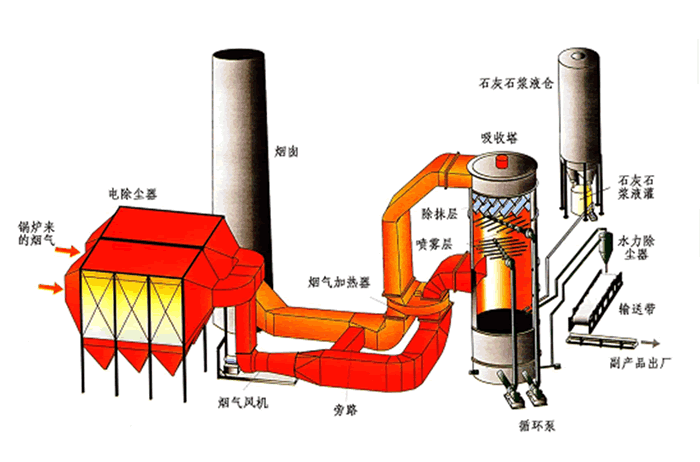
Flow Chart of Limestone (Lime) - Gypsum Wet Flue Gas Desulfurization Process
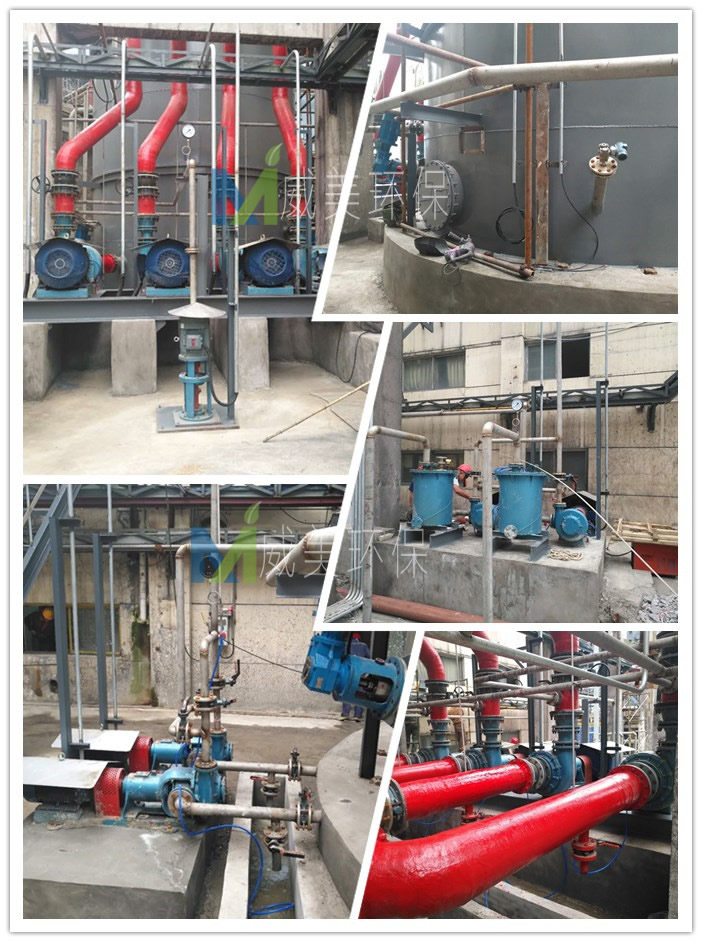
Case of Hebei Weimei's Wet Flue Gas Desulfurization